

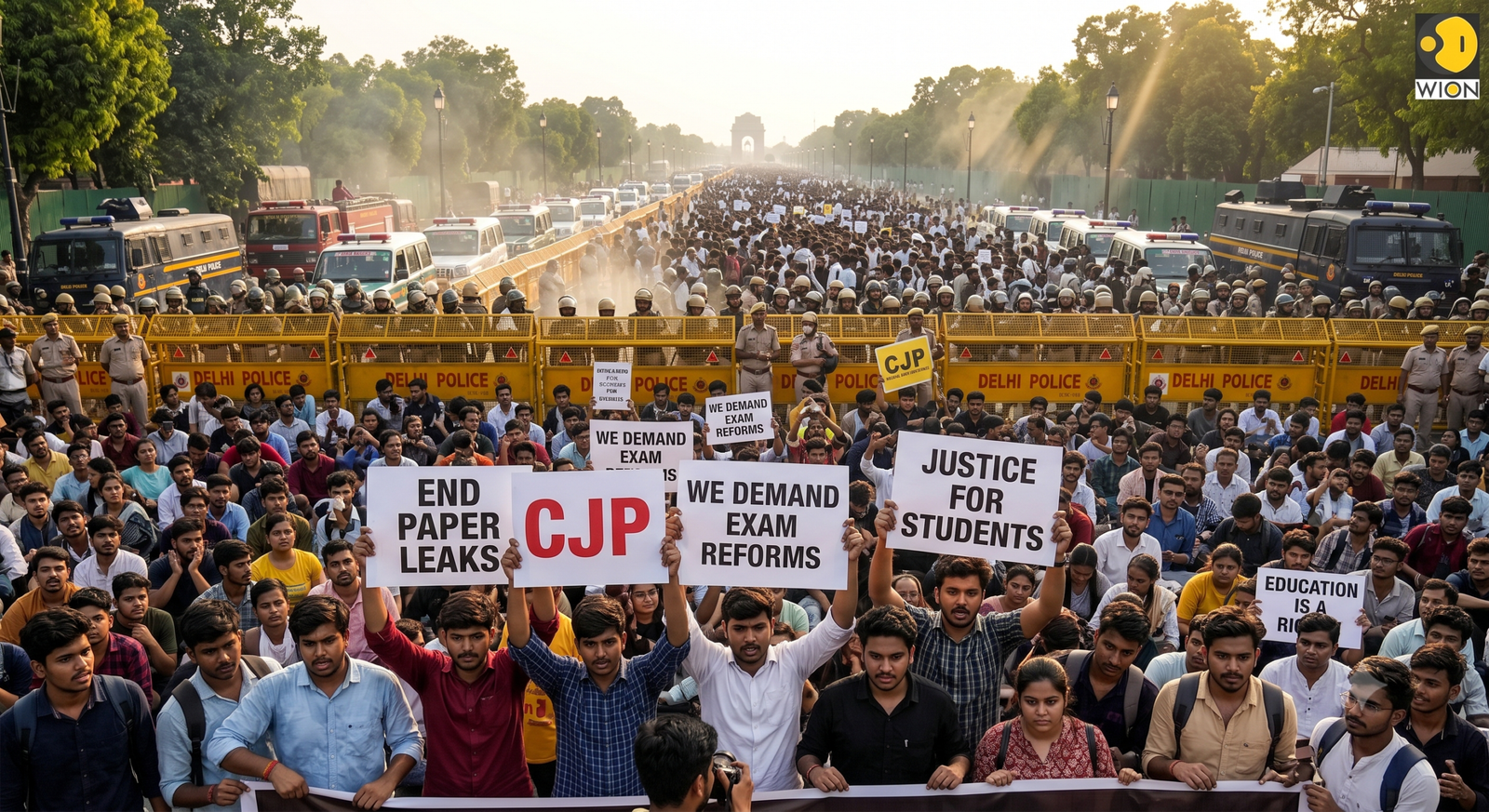
NEW DELHI — Tensions flared in the heart of the national capital as thousands of student demonstrators converged near the Parliament complex, leading to police action, barricade breaches, and severe traffic disruptions across Central Delhi.
The demonstration, organized by student representatives, was called to address systematic issues within India’s national examination framework, specifically targeting recent paper leak scandals and advocating for systemic educational reforms.
Key Takeaways: What You Need to Know
- Primary Cause: Widespread anger among students over paper leaks and systemic failures in major national entrance examinations.
- Location: Sansad Marg and surrounding corridors near Jantar Mantar, New Delhi.
- Police Action: Security personnel deployed tear gas and baton charges (lathi charge) after protesters attempted to scale security barriers.
- Prohibitory Orders: Section 144 / prohibitory orders remain strictly enforced across the New Delhi district.
Key Demands Submitted to Union Ministry
During the standoff, a delegation of student leaders met with Union Minister JP Nadda to present a formal four-point memorandum detailing their core demands:
- Overhaul of National Exam Security: Implementation of robust, leak-proof protocols for all central-level competitive exams.
- Release of Detained Activists: Immediate and unconditional release of activist Sonam Wangchuk.
- Ministerial Accountability: Demands for the formal resignation of the Union Education Minister over institutional oversights.
- Compensation for Affected Families: A monetary compensation package of ₹1 crore for the families of candidates who tragically lost their lives to suicide amid exam uncertainties.
On-the-Ground Standoff and Security Response
1.Demonstrators Assembly:Sansad Marg Corridor.
Thousands of student protesters gathered outside designated boundaries, attempting a direct march toward the Parliament complex to voice their grievances.
2.Barricade Escalation:Sansad Marg Police Station.
As the crowd surged against police barricades, security personnel formed multiple security cordons to halt the unapproved advancement.
3.Deployment of Dispersal Tactics:Tear Gas & Baton Charge.
Following repeated warnings and attempts to breach the barriers, police deployed tear gas shells and used light force to scatter the front-line crowd, resulting in minor injuries that were treated on-site.
4.Detentions & Traffic Rerouting:Current Status.
Key organizing figures, including student activist Abhijit Dipke, were taken into preventive custody. Traffic across Central Delhi remains heavily congested as police maintain strict perimeter controls.
High-Volume Search Context & FAQ
Why are students protesting in New Delhi?
Students are protesting against recurring paper leaks in national competitive exams (such as NEET and UGC-NET), demanding stronger legal safeguards, systemic reforms, and strict institutional accountability.
Was the Parliament march authorized by Delhi Police?
No. Delhi Police issued a formal statement clarifying that no official permission was sought or granted for a march to Parliament. Gathering remains restricted exclusively to the designated protest site at Jantar Mantar.

1 Comment
Pingback: BIG BREAKING: Education Minister Dharmendra Pradhan Resigns Over NEET Leak! - Bharat Right Now