

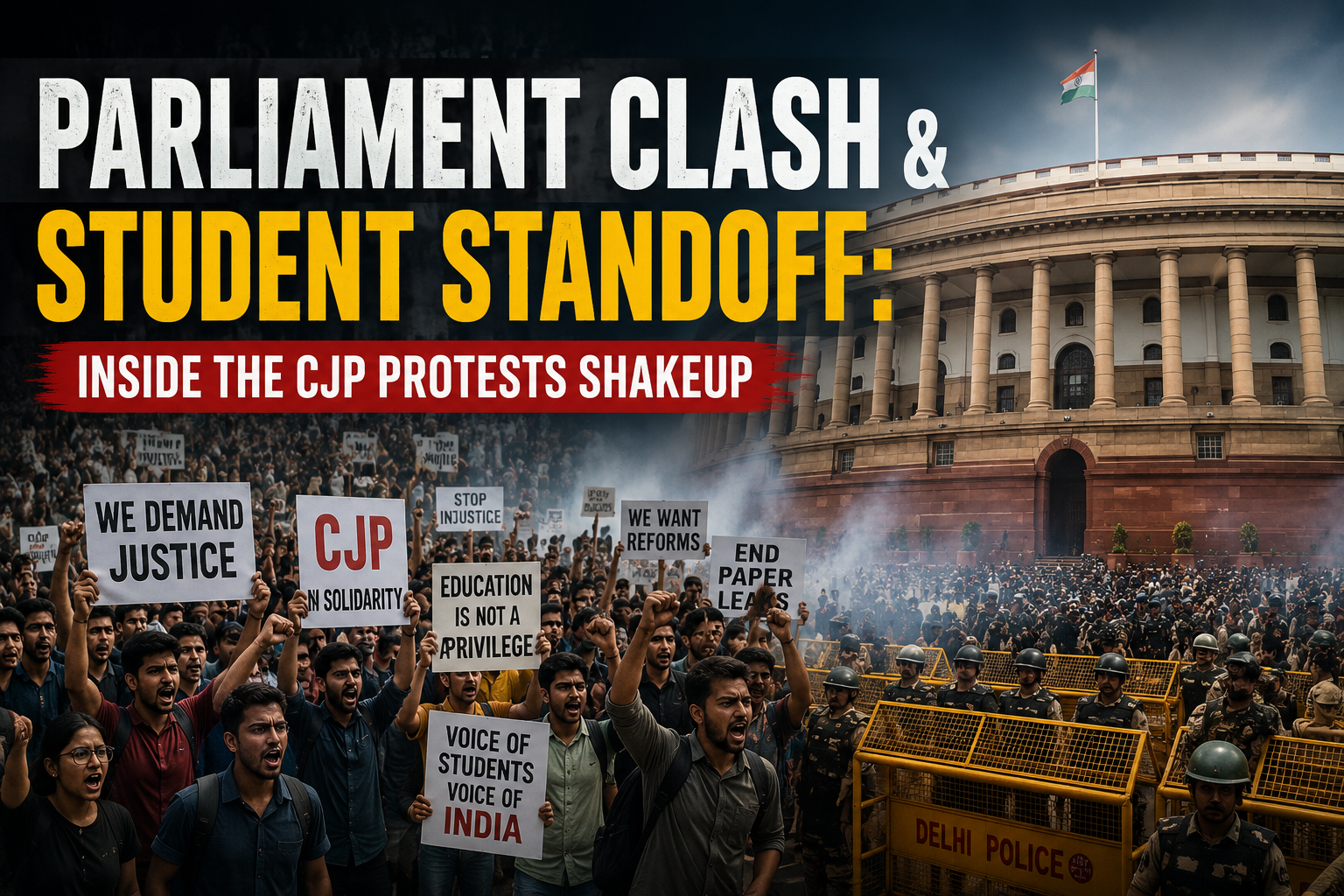
The confrontation between India’s central government, opposition leaders, and student representatives from the Cockroach Janata Party (CJP) has reached a boiling point both inside Parliament and across the demonstration grounds of New Delhi. What started as a satirical digital movement founded by youth icon Abhijeet Dipke has transformed into a major political force, mobilizing thousands of Gen Z youth, students, and citizens demanding systemic accountability over national examination integrity and youth unemployment.
1. The Month-Long Standoff at Jantar Mantar
For over thirty days, the protest centre at Jantar Mantar has served as the epicentre of a massive student uprising. Spurred by recurring national entrance exam irregularities—most notably the widespread controversies surrounding the NEET paper leaks—young protesters have occupied public spaces to demand structural changes to the country’s educational framework.
However, as the movement has gained national attention, tension at the demonstration site has escalated:
- Infiltration Concerns: Student spokespersons from the CJP movement recently raised alarms regarding outside elements attempting to infiltrate the peaceful gatherings. Protesters reported deliberate attempts to incite unrest, provoke security personnel, and compromise the integrity of their non-violent demonstration.
- Neutral Venue Deadlock: In an attempt to de-escalate the situation, the government issued four formal invitations extending an open offer for dialogue. Union Minister J.P. Nadda emphasized that the government was ready to listen to student demands without standing on prestige. However, student delegates firmly declined meetings proposed at official residences or political offices, insisting that any official negotiations must take place strictly at a neutral location, such as the Constitution Club of India.
2. High-Stakes Clash in Parliament: Modi vs. Rahul Gandhi
As street protests continued, the floor of Parliament mirrored the outside chaos, turning into a fierce debate between the ruling government and the opposition over the state of Indian education.
- The Prime Minister’s Assurance: Prime Minister Narendra Modi addressed the ongoing unrest by assuring the public that the welfare of Indian youth remains the government’s highest priority. Promising swift legal action, the Prime Minister stated that no individual involved in compromising entrance examinations or threatening student futures would be spared. The administration highlighted newly planned legislative reforms, fast-track courts dedicated to exam fraud, and stricter anti-paper-leak measures designed to rebuild trust in public institutions.
- Opposition Counter-Attack: Leader of the Opposition Rahul Gandhi launched a direct assault against the administration’s handling of the crisis. Rebutting the Prime Minister’s remarks, Gandhi accused the ruling party of enabling the complete capture and destruction of India’s public education system. He argued that the government has consistently protected high-ranking officials responsible for repeated administrative failures rather than taking decisive action to safeguard students.
3. Core Student Demands Driving the CJP Movement
The CJP movement and participating student bodies have organized their agenda around three non-negotiable points of reform:
- Ministerial Resignation: The immediate step-down of the Union Education Minister, holding the ministry politically accountable for systemic failure in national competitive exams.
- Police Accountability: Comprehensive legal action and the filing of FIRs against security personnel involved in assaulting student demonstrators during recent marches toward Parliament.
- Institutional Reform: Total overhaul of public examination agencies, the establishment of independent oversight bodies, and statutory guarantees protecting examination papers from future leaks.
Looking Ahead
With parliamentary debates remaining deadlocked and student organisations holding firm on their demands for neutral dialogue and executive accountability, the path forward remains uncertain. Whether the upcoming rounds of negotiation can bridge the trust gap between the nation’s youth and the state will define the future of India’s educational policy.
